AL AIRE: YILIAN CAÑIZARES
MARCH 24, 2026
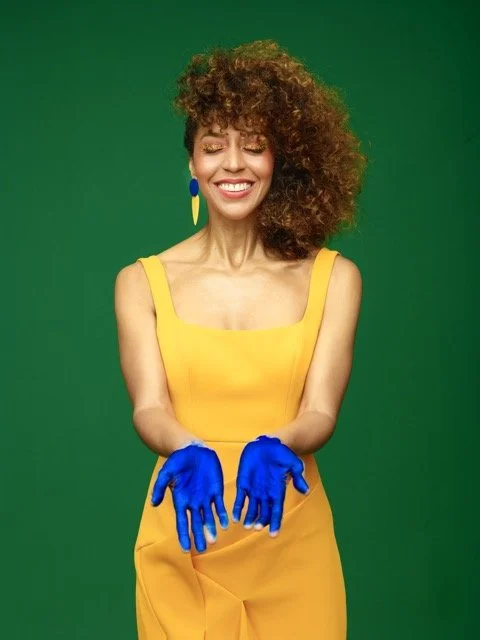
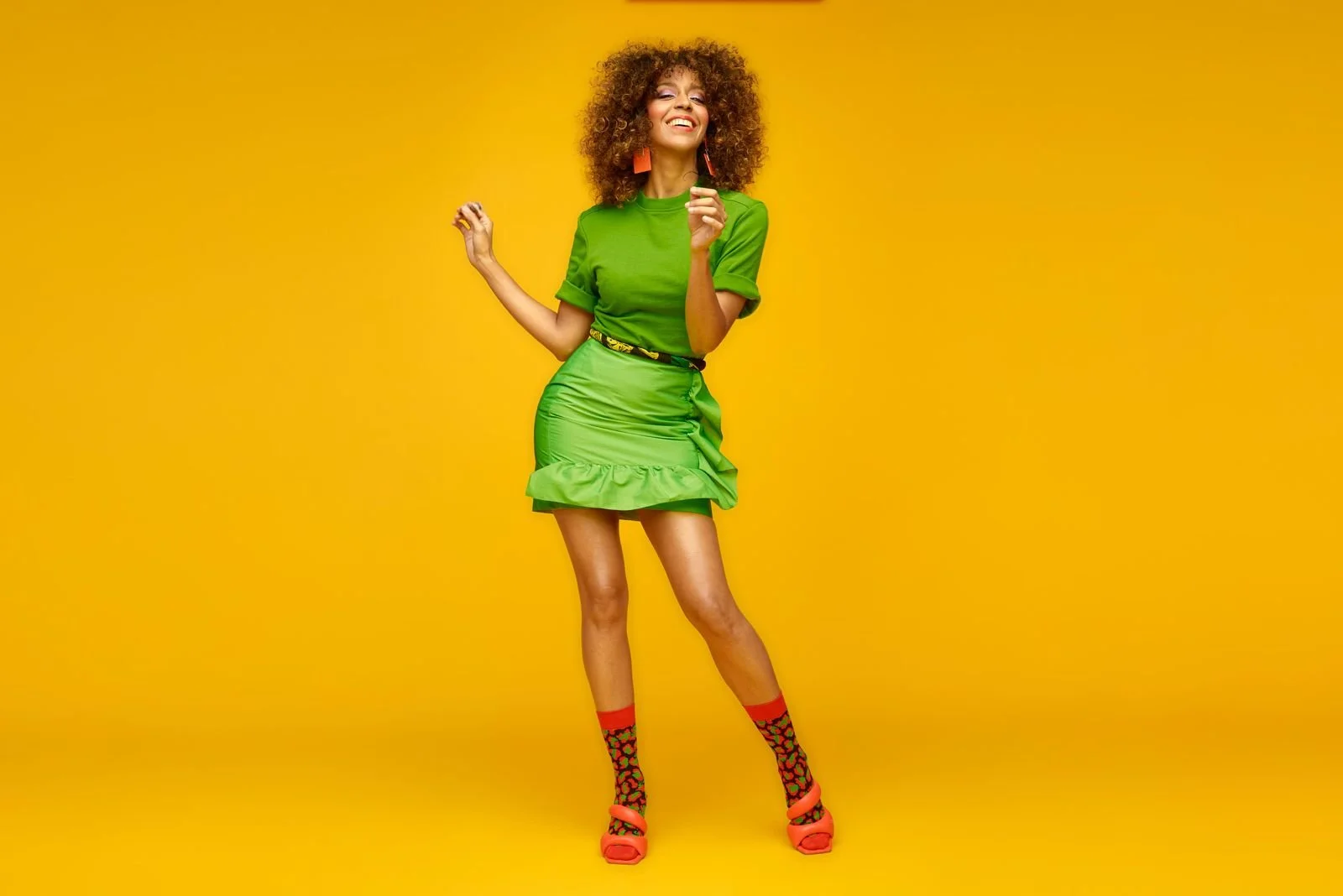
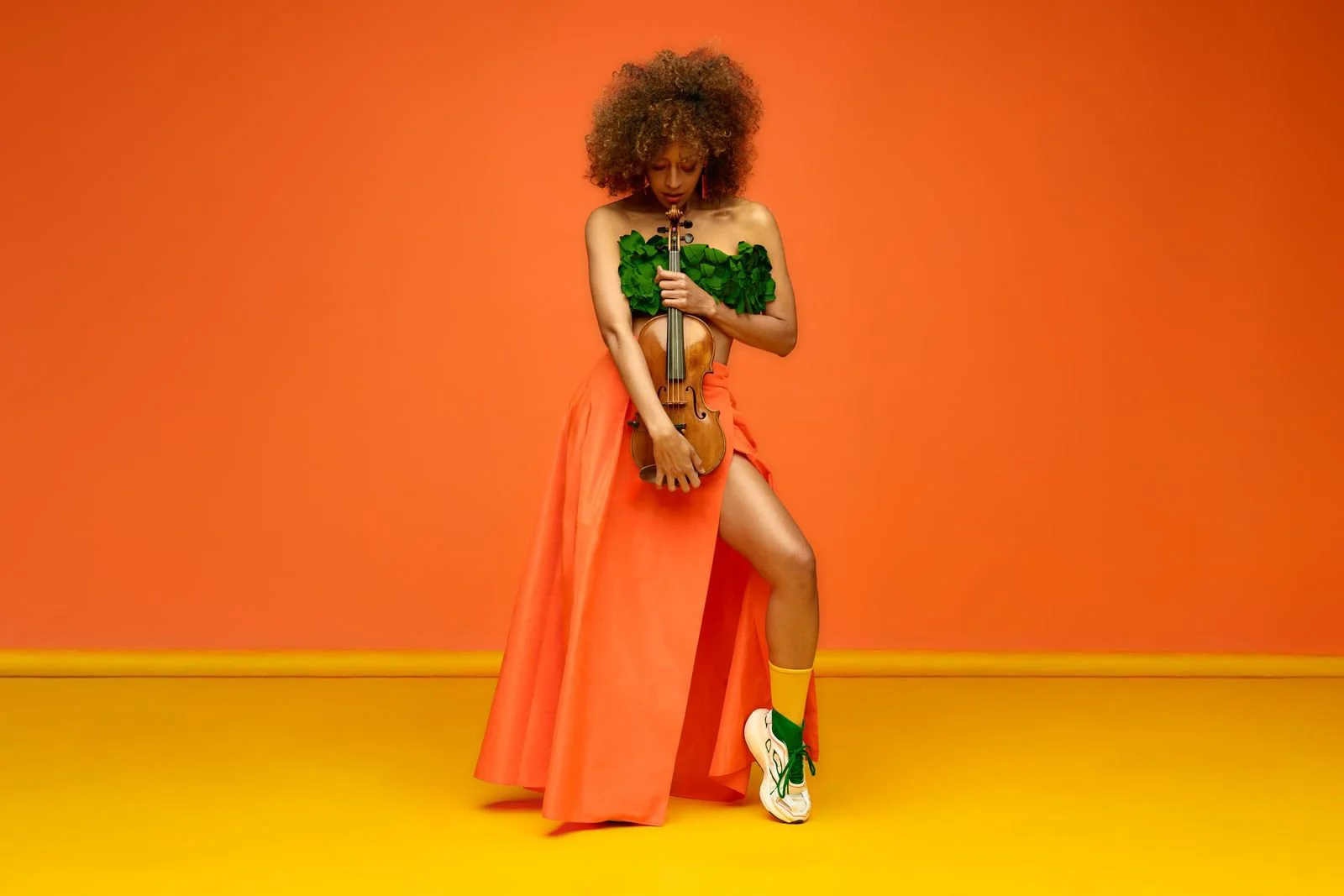
Yilian Cañizares is a violinist, a vocalist, a composer, and an educator from Havana, Cuba whose feminine perspective and award-winning reimaginings of Afro-cuban music have taken her to stages across the world. Yilian will be performing in Baltimore for the first time on April 8 at Keystone Korner and La Sonora sat down with her over cafecito to learn more about her journey as an artist.
photo credits: Franck Socha
LISTEN TO THE FULL INTERVIEW (en español)
Yilian Cañizares es violinista, compositora y educadora de La Habana, Cuba - sus reinterpretaciones premiadas de la música afrocubana la han llevado a escenarios alrededor del mundo.
Yilian se presentará en Baltimore por primera vez este 8 de abril en Keystone Korner, y La Sonora se sentó con ella a compartir un cafecito y conocer más sobre su trayectoria como artista.
SEE YILIAN LIVE
APRIL 8
Keystone Korner Baltimore
READ THE TRANSCRIPT
La Sonora (00:00)
Thank you so much for being here with us today, Yilian. It's a pleasure to meet you. I'm Maggie with La Sonora, we're a cultural group here in Baltimore. We were so excited when we found out you were going to be in our city - excited to get to know you and your music and curious to learn about what inspired you to become an artist and your journey.
Yilian (00:32)
My name is Yilian Cañizares. I come from Havana, Cuba. I'm violinist, singer, composer and educator. First I want to say that I feel very happy because it's the first time I'm going to be in Baltimore performing. I feel very excited to be to bringing my music and my message to a Baltimore audience. And I'm very grateful to you, La Sonora, for allowing me this space here to introduce myself a little bit.
I started making music as a young girl in Cuba, first with my voice, singing in a group called Los Meñiques. Los Meñiques is the little pinky finger in the hand. And it was a fabulous group by an incredible teacher, María Álvarez Ríos, that did education and musical initiation that was marvelous. And that's where I first felt that love, that desire for the stage, that enthusiasm that has stayed with for life. I then started playing violin and piano at Manuel Saumel's school in Havana, Cuba.
I had a special attachment to the violin because it's an instrument that when I first saw it, it struck me. I studied in Cuba, then to Venezuela to follow my studies as part of the system, and then I took a scholarship for Switzerland, where I still live.
My whole life I have to say has been dedicated to music and art.
La Sonora (02:28)
Que chevere. What influenced you in becoming a musician? Clearly you have a passion, what called you? Was it your ancestors, your upbringing, the natural world? ¿Qué te llamó?
Yilian (02:51)
Well, the house, I really come from a family of athletes and intellectuals. But my grandfather knew how to sing very beautifully And... Both he and my mother were intently listening to my interests and nurturing them. Since I was a young a child they took me to many concerts of all kinds of music. Since I little I was in contact with classical Cuban music, jazz, with folk. And they realized that as soon as I was at the concerts, there was something very... I would come home and I would remember the melodies and would tell my mom when I was at the concert, “I want to go up on stage, I want to go up on the stage.” So much so, that my mom said, “let's see what happens here”
And that's is something I have to say that I carry inside me.
La Sonora (03:55)
Yes, definitely. Well, you can feel it in the music, it is like a force that you have inside. And how beautiful that your family supported you, right? Because there many examples out there where families do not give water to those creative seeds that we have as children and how wonderful that they supported you in that journey.
Yilian (04:18)
I feel that yes, I have been very privileged in that aspect and in many others, as you said, so beautiful, that my family has given water to these seeds. And I feel that particularly in childhood, I, for example, I feel very responsible now that I am teacher too and that I educate children and I feel very responsible too when there are children who come to my concerts and that the parents bring them especially if they are girls because I think it's very important that girls have a feminine role, they see that it's possible, that one can be a leader, that one can be a composer, as a leader of a project, carrying their message through the world.
La Sonora (05:04)
Definitely. In this country, in March we celebrate women’s history month. Being a musician, having a career in an industry that sometimes - where there are women who are leaders but sometimes - navigating the machismo that exists in the industry and all that can be difficult, how have you navigated that in your career? How have you overcome that? It seems like a mountain sometimes.
Yilian (05:37)
It's a mountain and you need lot faith, perseverance, love and inner strength to climb it. Because it's a mountain that sometimes you think you'll finish. And I consider myself very strong, and sometimes you say, wow, how strong, how strong. I have a lot of respect and admiration for all women in general because of what we deal with in our day-to-day lives. I feel like we are heroines of everyday life. But I also feel lot admiration for those women who are capable of several fronts at the time, who I see triumphing in their careers and the same time being mothers, wives, sisters, daughters. Multitasking. And working so that it becomes something that is, in the next generations, something normal. That it is the norm and it is not the exception.
La Sonora (07:18)
I feel it. You are also a part of an incredible Afro-Cuban musical and cultural legacy, a lineage. I imagine you are very proud. Can you talk a little bit about that? How do you connect with and continue that legacy? You are part of that story too - how does it feel to be a part of something that has been so impactful on the whole world.
Yilian (08:02)
Yes, Cuban culture in every sense is very powerful, very powerful, it is very strong culture that comes from the roots of spirituality that we have and spreads through art in all its manifestations, music, painting, dance, poetry, cinema. And well, I feel...
I'm proud and very fortunate to have that my DNA and to have been able to nurture myself from that culture. It's also a responsibility because it's trying to do the best you can to honor that tradition, that culture, and at the same time try to continue, to keep moving forward, to not stay stagnant, right?
So, I always try to do things in the most honest way possible. I feel that when things are from the heart, people may or may like but at end of the day, if I know that I things from my heart, with honesty, and that I am trying to be as coherent as I can be with the culture of the Cúbalbengo and my ancestors, that is already a great satisfaction.
La Sonora (09:31)
And how do you think your music is an evolution of that? Because there are many roots, but also when I listen, there are elements of the future that you are painting with and using sounds that you may not necessarily imagine would come together, but they do, in a beautiful way. How would you describe your sound? The messages you're trying to... Well, you're conjuring it. You're bringing it to reality. Can talk a little bit about your artistic practice and the messages you're sending to world?
Yilian (10:25)
Of course. would say that first all, thing that is very important to me is that I am bringing a feminine perspective of Cuban music, which is a music that is very rich, but which also a that has lot of testosterone. And I, being a woman, I have no other option and I do want to another option than to interpret it and share it from a place that continues to continues to have strength.
But it also has lot of sweetness, has a lot sensuality, also something very feminine. For me it is very important to have that perspective of the other side, of the yin yang of that music. And of course, what you said about the future, you know, at the beginning when I started, people didn't...
Many people told me but hey, how is possible that you making Cuban music with a violin? Because for them it was not within the framework of what Cuban music was, the violin, the mixed voice and the same thing I put on my violin effects like Jimi Hendrix that I can with the drums tied. After all, tremendous madness in the end. But I feel, just as I feel Cuban, I also feel like a citizen of the world. I left Cuba when I was very young.
And that is a great wealth. The fact of being able to live in different countries, the fact of being able travel all the time. I spend more time sometimes on a plane than in my own home. So that makes my music have many sides. Because the air I breathe is from many sides, because the food I eat is from many sides, because I have friends, I have my private life, people who not come from the same place as me.
All of that for me, and I feel that as humans it's very important to share that message that our difference is a wealth, that our difference doesn't make us enemies, that our difference is simply, for me, are the same star disguised in different with a different but in the end, the essence - We are all human right? And I feel it's very nice to be able share through my music, and that's what I to do.
La Sonora (13:00)
Well, thank you for that gift you have given to the world.
What do you feel is the role of the artist in the world? It's something that has called you all your life, right? How do you want influence the world? What responsibilities you you as an artist?
Yilian (13:30)
It's so nice that you asked me this, especially in the moments we are living, right? Because the world is very turbulent, very chaotic, and it's very difficult for everyone when we wake up to see so much bad news. And me it's very curious that this new album that I'm releasing, which is called Vitamin Y, I never imagined it would come out at this time in the world. I did it with the intention of giving it to him.
Hope, resilience, power, energy to people. And look, at the moment it's coming it's as if it was written that had to come now. And I think that's one of the functions of the artist, to bring peace, bring hope and light where is darkness, to open the heart.
Because music has the power that it has, more than any other thing that I know, to open the heart and let in a message in such powerful way. And we also have a social responsibility. I, for example, feel very inspired by artists like Nina Simone, who used, at one point, from the world and from her life, her voice to defend the causes of those who did have voices.
And as I speak to you about that, I get goosebumps on my skin because it is something that is very beautiful, very powerful and that one also has have courage to do that, to stand in front of a stage and to defend what one believes. One has to defend from love without accusing anyone, but to defend what one feels one has to defend and to give their voice to those who need it.
That has cost me, for example, it happened at a concert, it hasn't happened to me much, but it happened to a concert that I was defending a message that I believed in and there two people who got and left the room because they didn't agree with the message I was defending. I was talking about... For me, life of any child anywhere on planet must have the same value. I don't want to talk about politics here because it's about politics. But for me, fact that there are children dying in the war simply because they in a part of the world, for me that is very difficult to understand. Without wanting to into any kind of political debate. And there were people who took badly and got up and left. And I felt bad, I felt bad because of course I don't want anyone to get up from my concert and leave. But at the same time, if I don't say it, I, who have a microphone and I have that platform for people to listen to who's going to say it? So I think we also have that responsibility and that...
We shouldn't forget that our... I can't be a musician like standing on a stage and simply doing beautiful things. I believe our mission goes further.
LA SONORA (16:59)
Absolutely. And what does it say about the world and where we are in the world that people take issue with saying something so important or so direct? It shouldn't be controversial to say that every child's life is valuable. That's not something that someone should be offended by, a feeling like that. Why don't we agree on that? It's weird, it's weird, but that’s where we are headed.
We are almost out of time together and I want to be mindful. What can people look forward to at your concert in Baltimore?
Yilian (17:44)
You can expect a concert full of energy, full of very original music. The project I'm presenting is a project that I think is unique in the world. It's a trio that is made of two musicians and people that I really love. It's a family on stage, they're friends and they're two kings on their instruments.
The bass player Childo Tomas, comes from Mozambique and also a very special which is a bass that he built himself with a body of an African instrument with two arms, that bass is really something very unique in the world. On percussion, the future of Cuban percussion Roberto Vizcaino Jr., who to me is a genius of percussion.
And that mix, we are, I say with humility, but I have to say because it's the truth, we are creating a new sound, reinventing concept of the trio and bringing Afro-Cuban and Afro-Latin to a dimension that really seems very interesting and very beautiful to And above all, you will find a concert that is full of love. We come with great desire to give it our best that we can give to all of you who go to the concert, so please don't miss it.
LA SONORA (19:14)
Well, Yilian, we'll see you on April 8th at Keystone Korner. Thank you much. And have a good trip. Thank you for everything you do for culture, for the world, and for giving us these vitamins that we need. It's a pleasure meet you.
Yilian (19:22)
Likewise. Thank you for your time. Un beso. Bye!