A syllabus connecting the Mexican and Palestinian struggles for liberation
curated by Alana Guzman & Marah Abdel Jaber
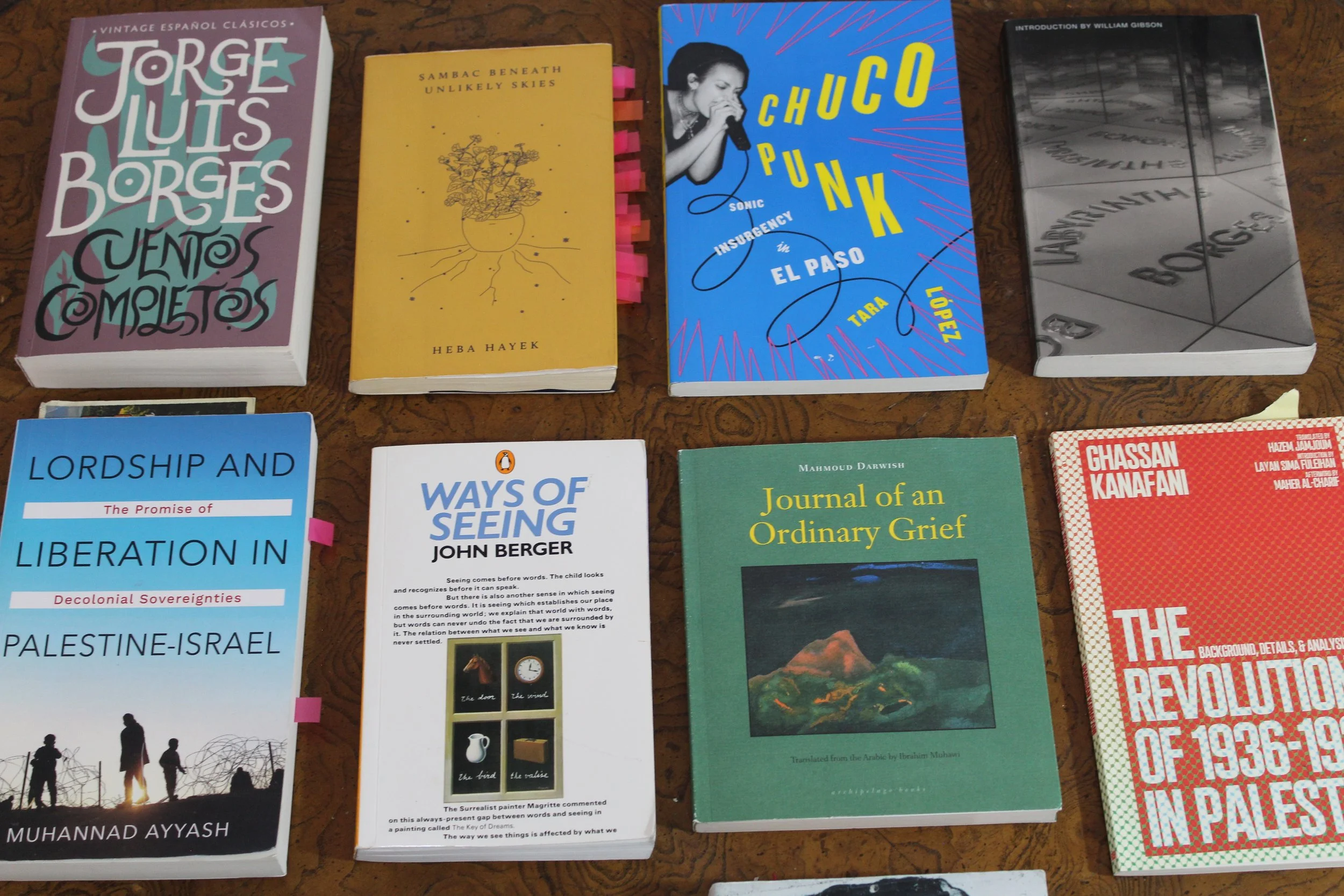
In preparation for curating AQUI SEGUIMOS: A LEGACY OF LOVE AND A HISTORY OF RESISTANCE, we've crafted a syllabus as a starting point for understanding the threads connecting the Mexican and Palestinian struggles for liberation. Discover love, resistance, and the inspiration behind Aquí Seguimos. This list is not exhaustive. It is meant to offer different perspectives, historical contexts, and is not an endorsement but rather an invitation to learn and frame your own analysis.
NOTES FROM THE PALESTINE-MEXICO BORDER BY ALEXANDER AVIÑA
Links the 2014 Ayotzinapa disappearances, the Ferguson uprising, and the siege of Gaza to trace how militarization, dispossession, and state terror connect struggles across borders. Its analysis of empire and violence "coming home to roost" offers a direct scholarly bridge between Mexican and Palestinian liberation movements.
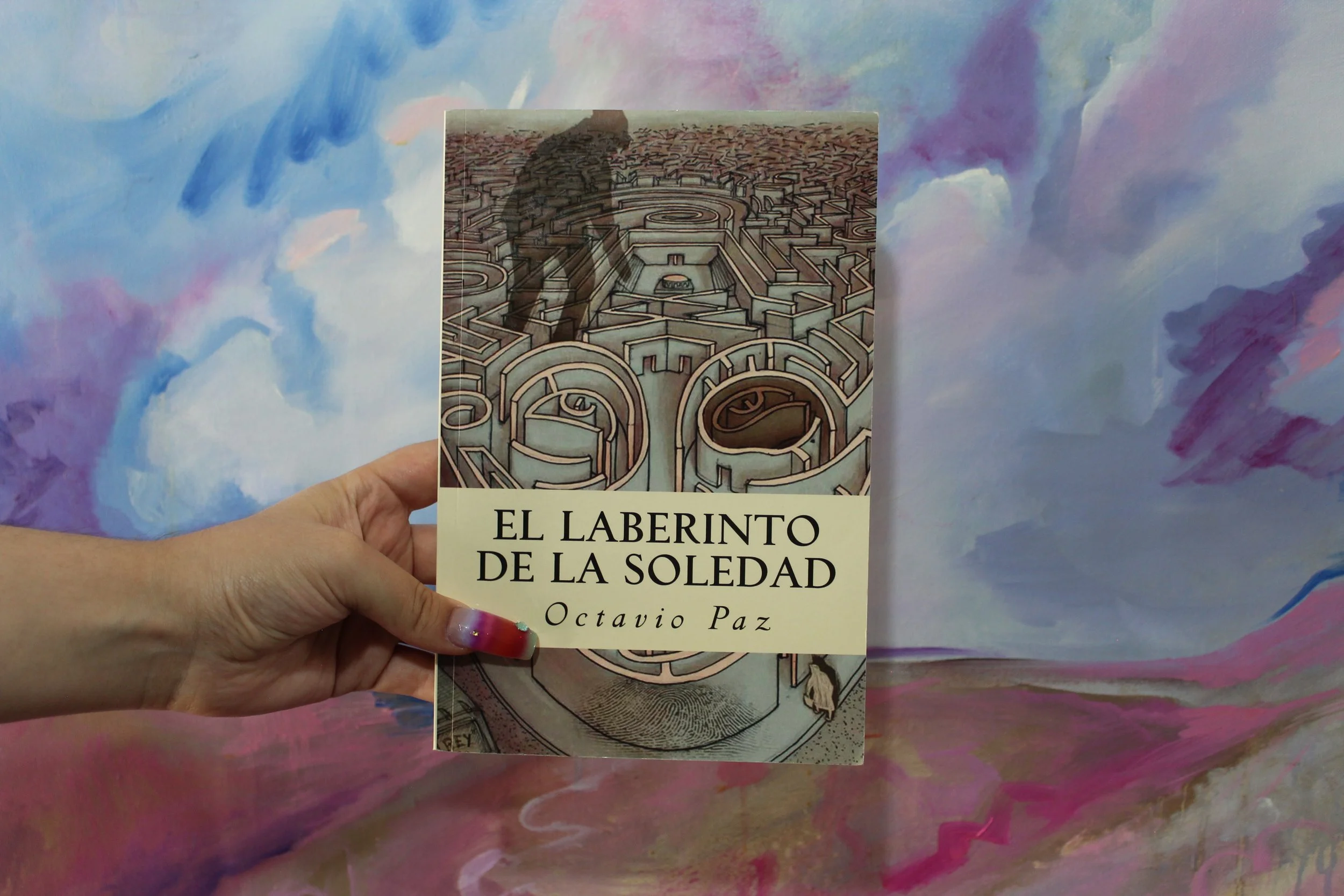
LABERINTO DE LA SOLEDAD BY OCTAVIO PAZ
A foundational work of Mexican thought, examining how national identity is shaped by history, isolation, and the search for belonging in the aftermath of conquest and colonization. Its exploration of solitude, masks, and the search for self remains essential for understanding the cultural and psychological throughlines of Mexican identity.
A note on Octavio Paz’s inclusion:
Paz’s inclusion in this syllabus is intentional, but does not signify an endorsement of him or his work by our curators. El Laberinto de la Soledad does not model the notion of solidarity, decolonial sovereignty, or resistance that we are curating this show around. During his lifetime, Paz was supportive of Zionism and touted two-state solution beliefs, which we staunchly reject. The Latin American left was highly critical of his political positions during his lifetime.
Paz introduces a framework for understanding colonized consciousness that has manifested across Mexican creative production. We are critical of his position and his work, including other thinkers such as Anzaldúa, Bonfil Batalla, and Bartra, who challenge and build upon Paz’s failures in decoloniality. This text is foundational for understanding how Mexican identity was theorized in the mid-20th century and embodies the misappropriations of liberation struggles that our show attempts to deconstruct.
To make sense of Paz’s background and the influence of this text on Mexican thought, we have included literature deconstructing his position, notions of decoloniality, and approach to creative production in Mexico, mentioned above. We also encourage anyone interested in reading Paz to supplement his language and approaches with core Palestinian texts included in this list: Recognizing the Stranger by Isabella Hammad, Lordship and Liberation in Palestine-Israel by Muhannad Ayyash, and The Revolution of 1936-1939 in Palestine by Ghassan Kanafani.
WHY DO WE GO TO WAR BY BASIL AL-’ARAJ
Published posthumously in the collection “I Have Found My Answers.” Written by Palestinian revolutionary intellectual Basil Al-’Araj as an exploration and intimate reflection on resistance and sacrifice. the essay stands as essential testimony to the philosophy underpinning the Palestinian liberation struggle and beyond.
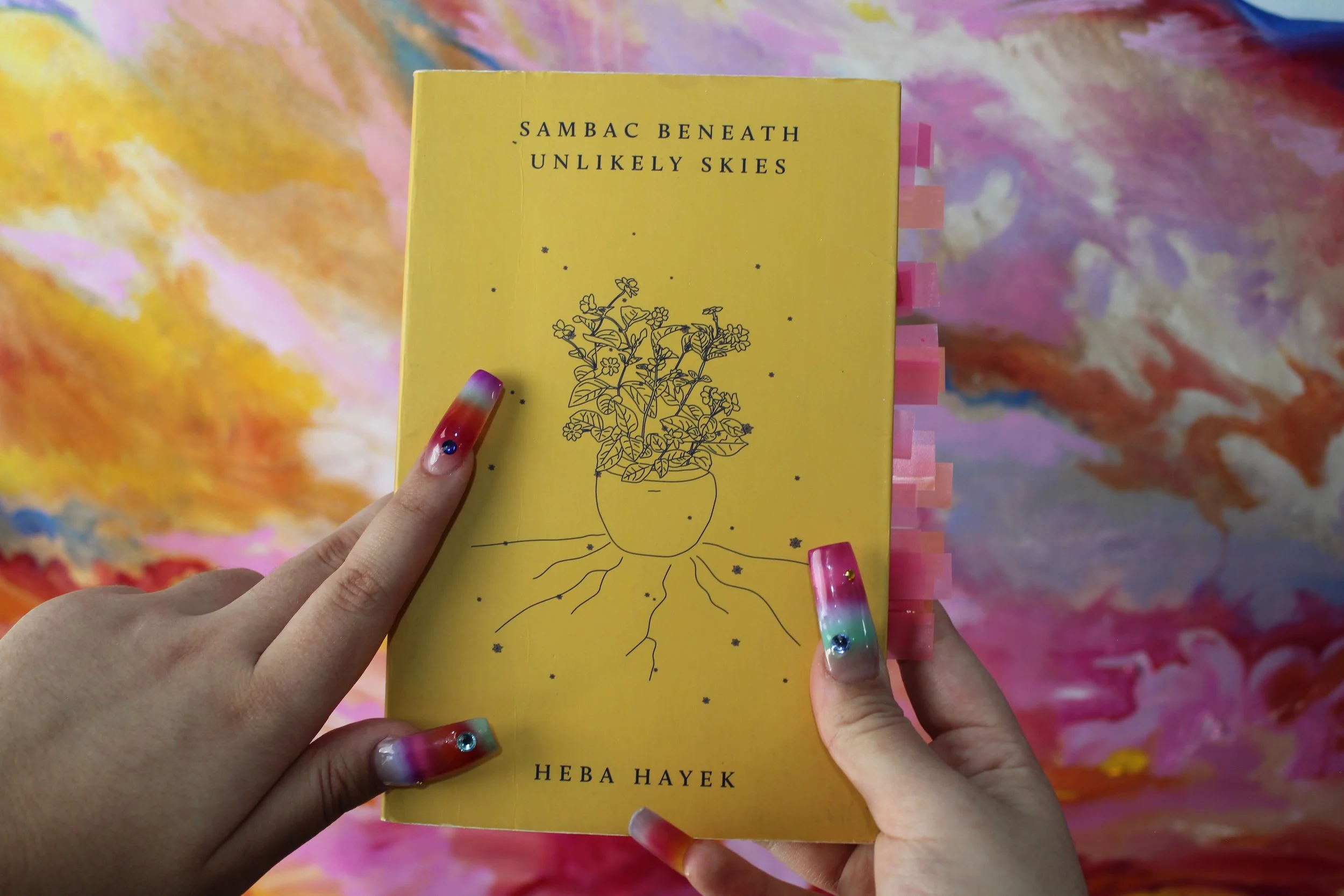
SAMBAC BENEATH UNLIKELY SKIES BY HEBA HAYEK
Collects tender, vivid vignettes of a Gaza girlhood, told from the distance of exile and shaped by the women, community, and daily rituals that sustained the narrator under occupation. Its intimate portrayal of memory, displacement, and survival makes it an essential reading for understanding how Palestinian women carry home, love, and resistance across borders.
EL AGUILA Y LA SERPIENTE BY MARTIN LUIS GUZMAN
A firsthand chronicle of the Mexican Revolution, drawn from the author's own experiences alongside revolutionary leaders like Pancho Villa. Blending memoir and narrative history, it captures the chaos, violence, and ideological struggle of the Revolution from within, offering a foundational text of Mexican revolutionary literature.
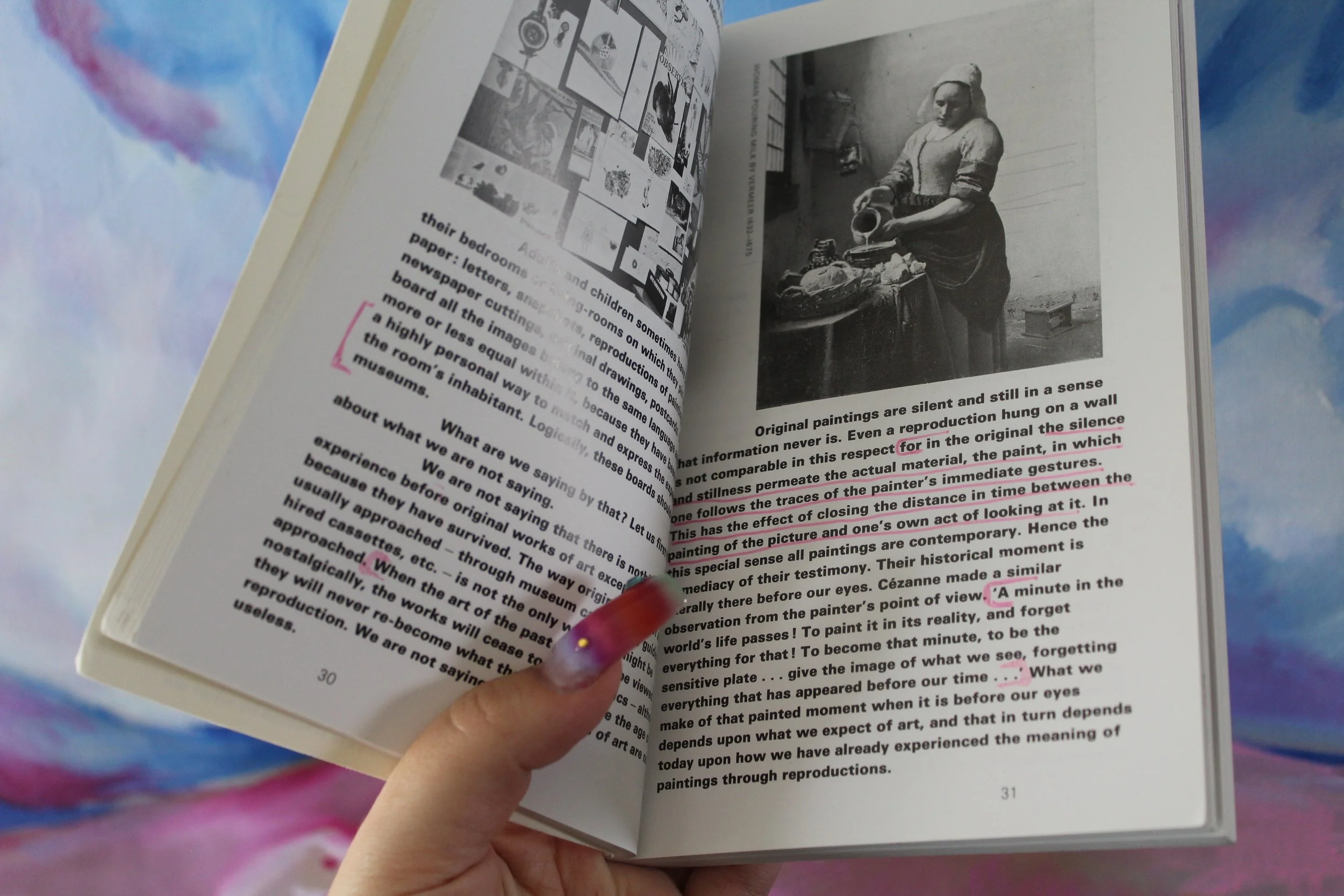
WAYS OF SEEING BY JOHN BERGER
A foundational text of visual culture criticism, challenging traditional art history by examining how power, gender, and ownership shape the way images are made and viewed. Its argument that seeing is never neutral, but always bound up in history and ideology, remains essential for understanding how art can reflect and resist the structures of power.
BORDER ARTE: NEPANTLA, EL LUGAR DE LA FRONTERA BY GLORIA ANZALDUA
Extends her borderlands theory into the realm of visual art, framing the border as a site of nepantla, an in-between space of transformation, hybridity, and creative resistance. It offers a critical lens for understanding how artists working at the edges of nations and identities transform rupture into a source of meaning and power.
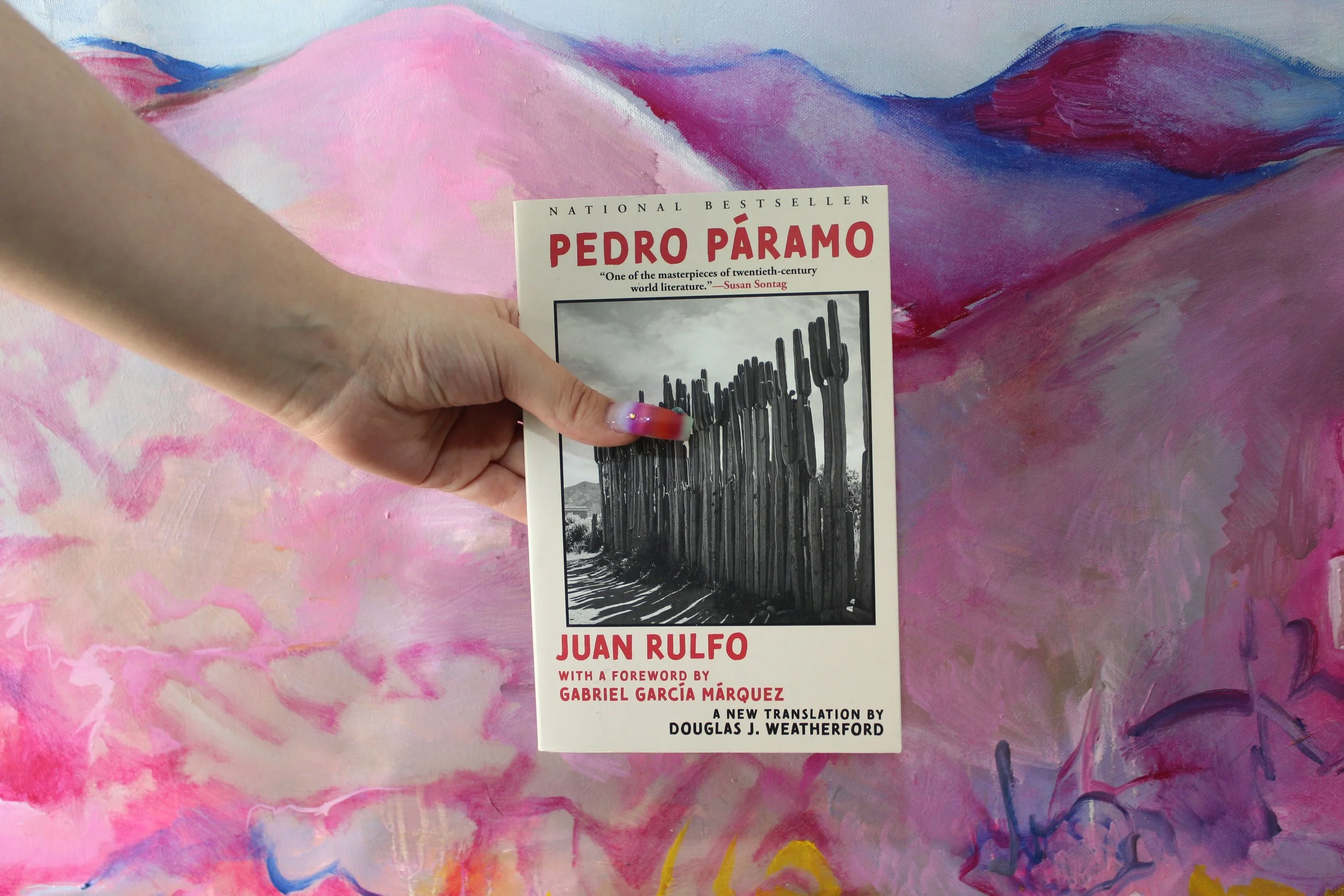
PEDRO PÁRAMO BY JUAN RULFO
Juan Rulfo's Pedro Páramo is a foundational text of Mexican literature, using a fractured, ghost-filled narrative to explore how memory, loss, and inheritance remain embedded in land long after the people who lived there are gone. It meditates on how communities carry grief and connection across generations.
NOTES ON THE UNDERGROUND IN GAZA BY HADEEL ASSALI
Frames the deep relationship between Palestinians and land as central to understanding resistance, arguing that Israel's attempts to sever people from land through displacement and violence have never succeeded in erasing that bond. Drawing on Palestinian song, poetry, and worship, the essay offers a lens for understanding how connection to land itself becomes a form of survival and resistance for indigenous communities globally.
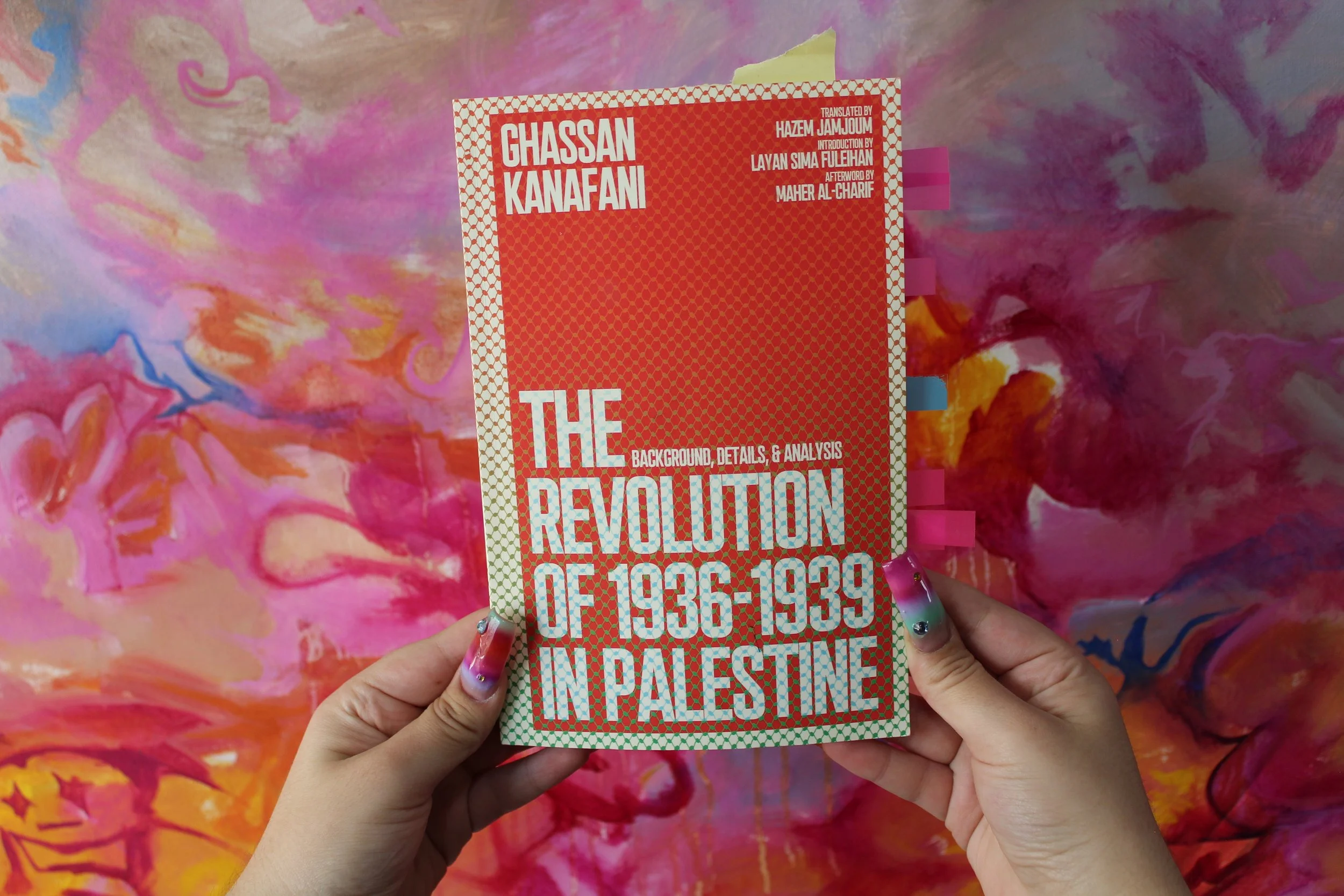
THE REVOLUTION OF 1936-1939 IN PALESTINE BY GHASSAN KANAFANI
A rigorously researched historical study written to reclaim Palestinian history from colonial narratives, tracing the class dynamics, resistance movements, and betrayals that shaped the era's uprising against British rule and Zionist settlement. it remains a foundational text for understanding the roots of Palestinian dispossession, the long history of organized resistance, and the role of creation in liberation.
SPECTERS OF REVOLUTION BY ALEXANDER AVIÑA
Examines the rural guerrilla movements that rose against state repression in Guerrero during the 1960s and 70s, uncovering a history of peasant radicalism largely erased from official narratives of Mexican modernization. Its account of land, violence, and resistance in the Mexican countryside offers essential context for the same author's later writing connecting Palestinian and Mexican struggles for liberation.
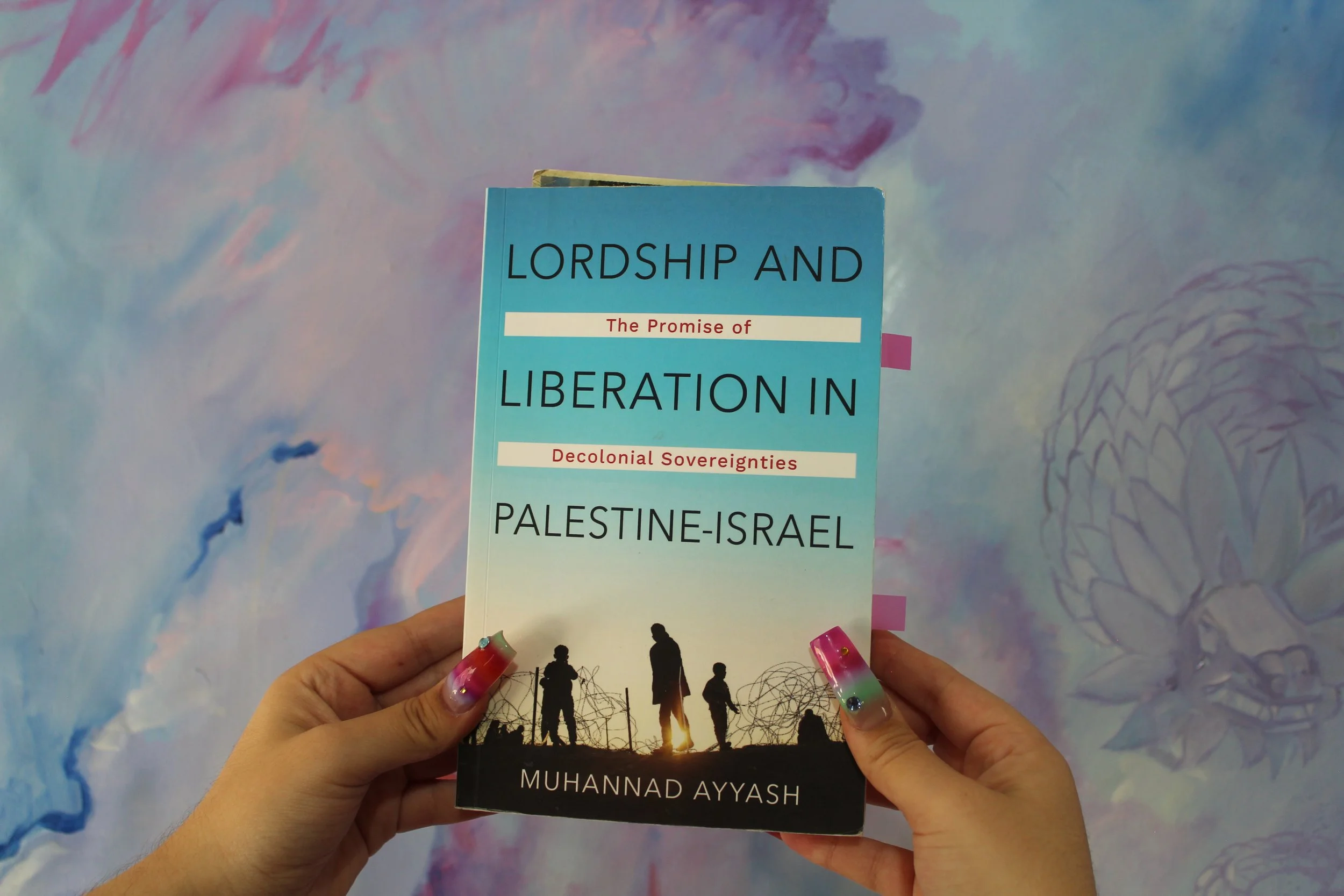
LORDSHIP AND LIBERATION IN PALESTINE-ISRAEL BY MUHANNAD AYYASH
A theoretical framework offering essential analysis for understanding Palestinian relationships to the land, challenging popular notions of liberation, and arguing for a sincere decolonial sovereignty that is conscious of increasing, inextricable links to our occupiers. Ayyash briefly, but brilliantly delves into the necessary place of imagination and creation in decolonial struggles.
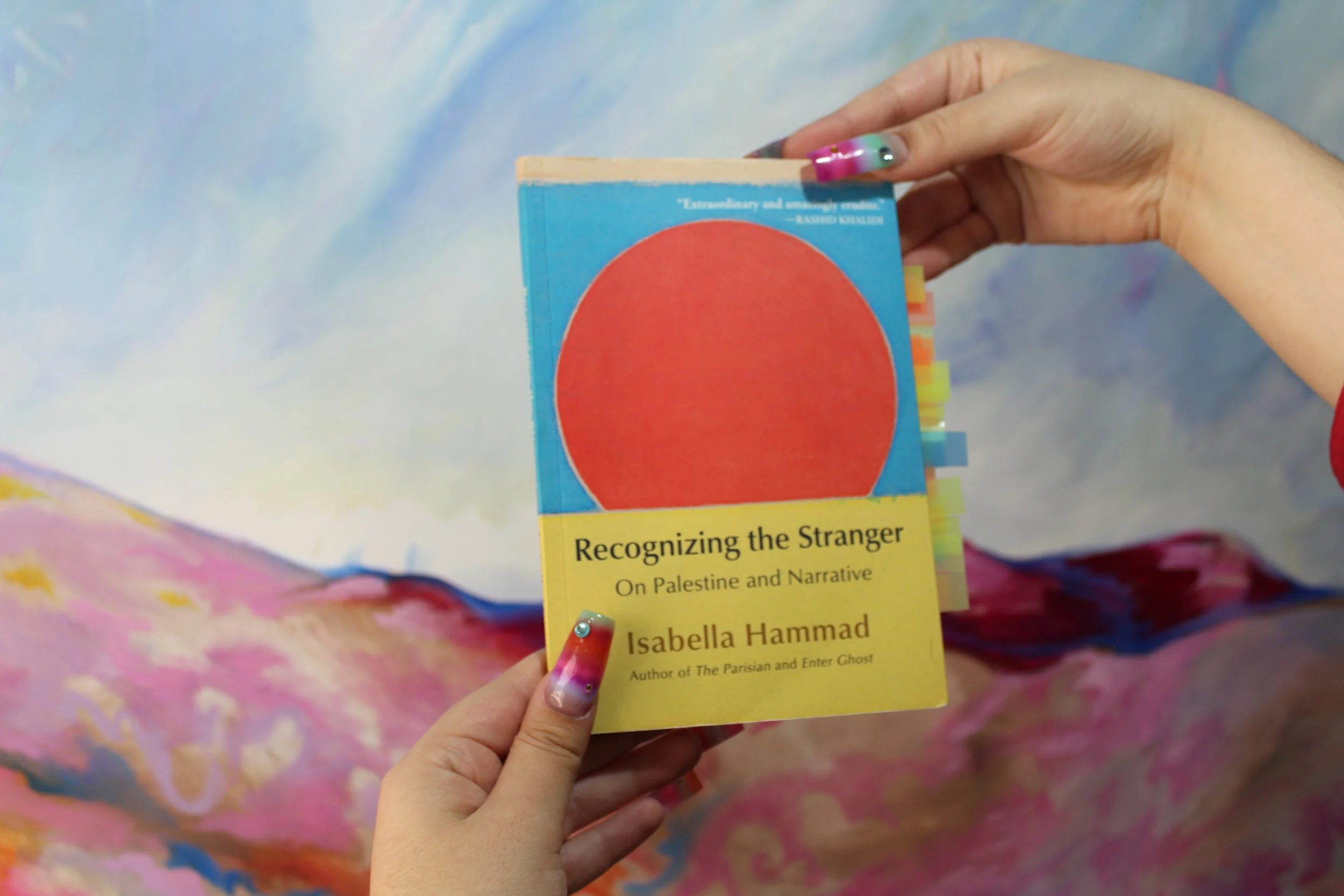
RECOGNIZING THE STRANGER BY ISABELLA HAMMAD
Exploring how narrative structures like recognition and epiphany shape our understanding of the Palestinian struggle. It offers a vital literary framework for thinking about art, ethics, and liberation. A foundational text for approaching the process of creating art under annihilation.
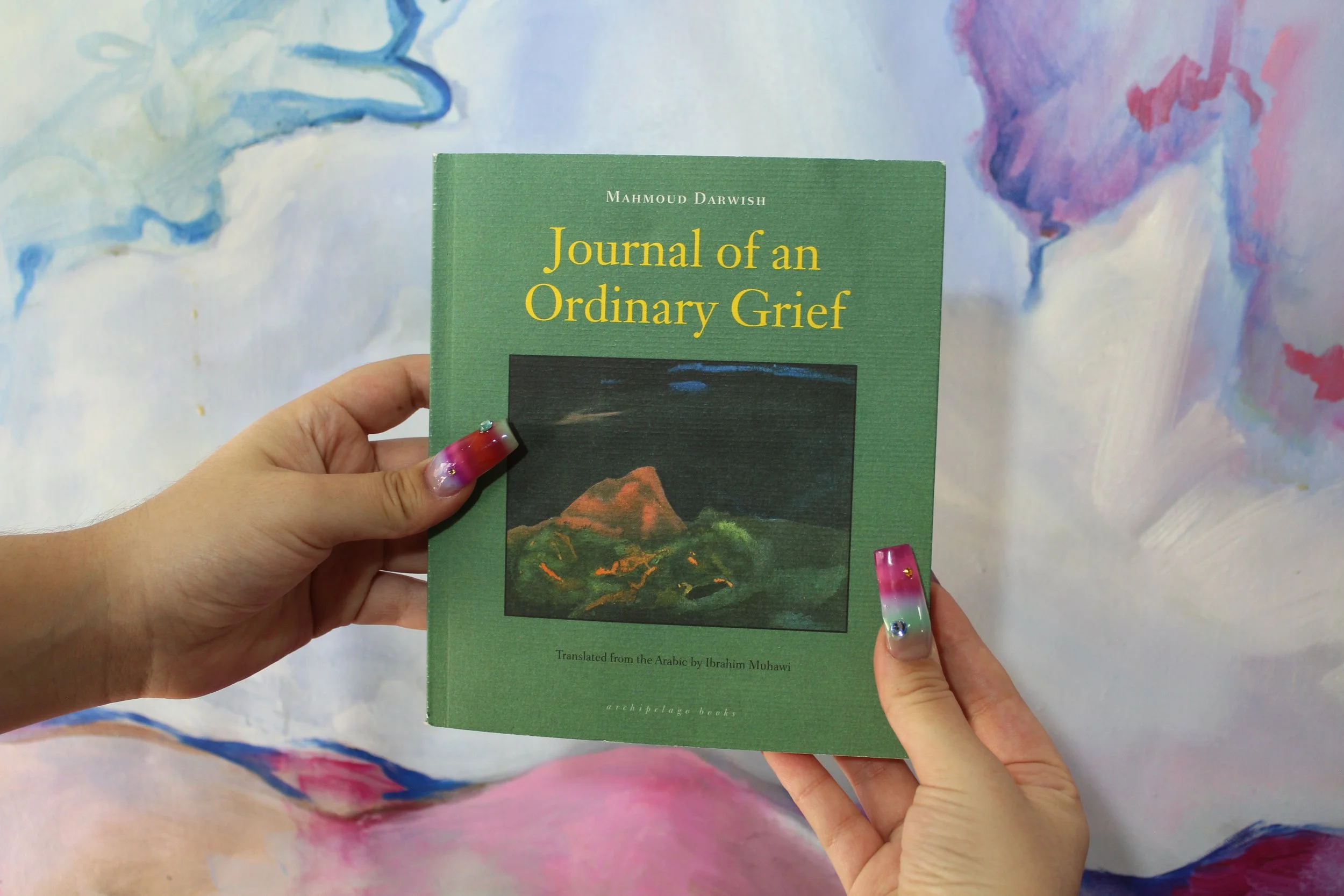
A JOURNAL OF AN ORDINARY GRIEF BY MAHMOUD DARWISH
Interrogates the meaning of occupation, memory, and homeland through a mix of soliloquy, myth, and lyrical prose. As the first of three major prose works spanning his career, it stands as an essential meditation on Palestinian identity and the inseparability of Darwish's life from his cause.
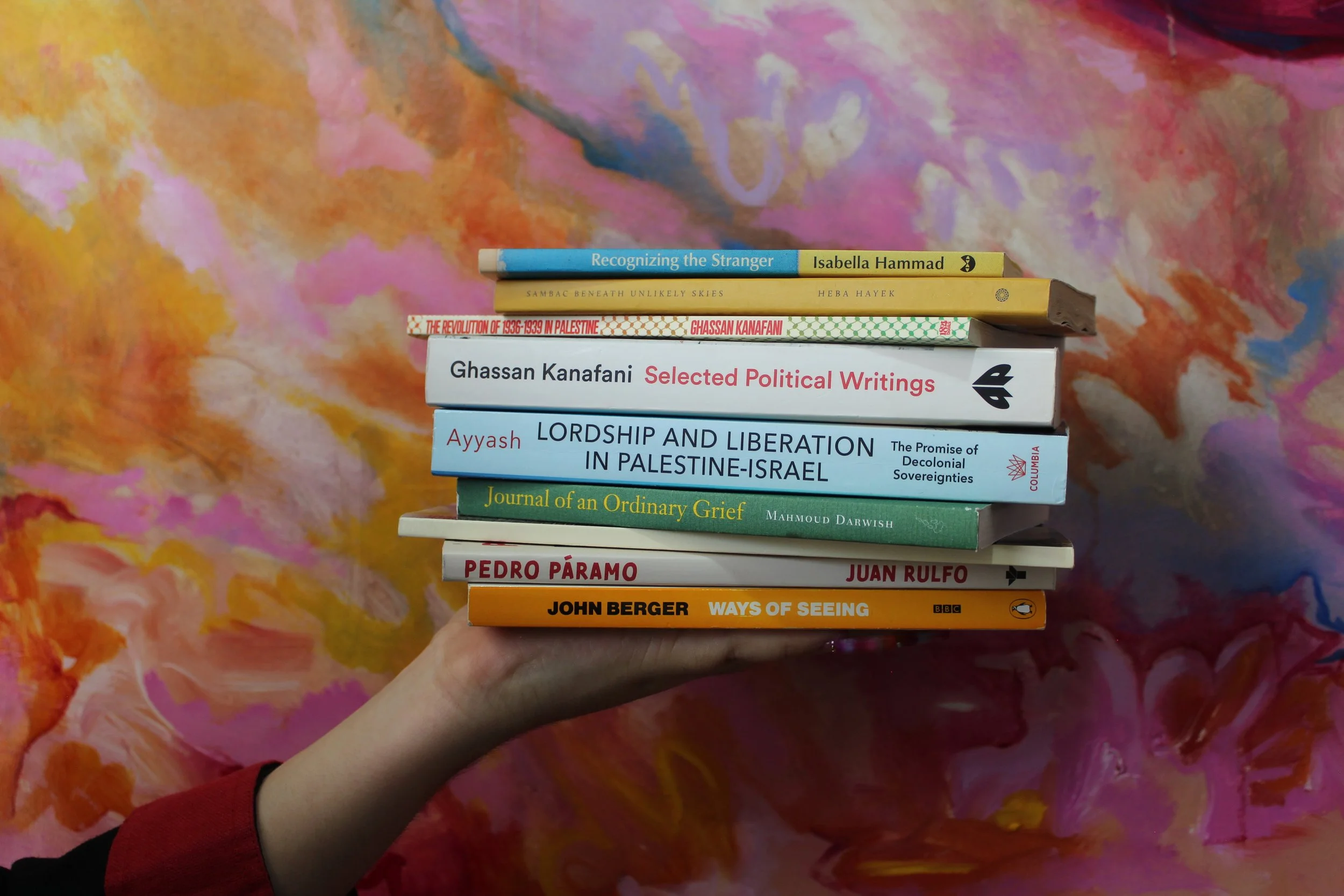
THE FULL SYLLABUS
Books:
Amor Perdido, Carlos Mosivais (1977)
Mexico Profundo, Guillermo Bonfil Batalla (1987)
La Jaula de La Melancolía, Roger Batra (1987)
Nunca Mas Un Mexico Sin Nosotros, Yasnaya Elena Aguilar Gil (2018)
El Laberinto de la Soledad, Octavio Paz (1950)
Chicano and Chicana Art: A Critical Anthology, Jennifer A. González, C. Ondine Chavoya, Chon Noriega, Terezita Romo, eds. (2019)
Chicano Art: Resistance and Affirmation, 1965–1985, Richard Griswold del Castillo, Teresa McKenna & Yvonne Yarbro-Bejarano, eds. (1991)
Borderlands/La Frontera: The New Mestiza , Gloria Anzaldúa (1982)
El águila y la serpiente (The Eagle and the Serpent), Martín Luis Guzmán (1928)
Los recuerdos del porvenir (Recollections of Things to Come), Elena Garro (1963)
La muerte de Artemio Cruz (The Death of Artemio Cruz), Carlos Fuentes (1962)
Señales que precederán al fin del mundo (Signs Preceding the End of the World), Yuri Herrera (2009)
Cartucho, Nellie Campobello (1931)
Lordship and Liberation in Palestine-Israel: The Promise of Decolonial Sovereignties, Muhannad Ayyash (2025)
Recognizing the Stranger: On Palestine and Narrative, Isabella Hammad (2024)
Journal of an Ordinary Grief, Mahmoud Darwish (1973)
The Revolution of 1936-1939 in Palestine: Background, Details and Analysis, Ghassan Kanfani (2023)
Sambac Beneath Unlikely Skies, Heba Hayek (2021)
My People Shall Live: The Autobiography of a Revolutionary, Leila Khaled (1971)
باب الشمس, إلياس خوري (1998)
Articles/Essays:
“Notes on the Underground in Gaza” Hadeel Assali
“Why do we go to war?” Basil al-‘Araj
“Notes from the Palestine-Mexico Border” Alexander Aviña
صَبْر – “Patience” as Resistance Areej Ashhab, Gabriella Demczuk, and Ailo Ribas / Al-Wah’at Collective الواحات
Rain is Coming, Mohammed El-Kurd
Enough for Me, Fadwa Tuqan (Poem)
"Border Arte: Nepantla, el Lugar de la Frontera," Gloria Anzaldúa
Movies/Shows/Media:
AL TAGHREBA AL FALASTENEA | التغريبة الفلسطينية, Hatem Ali (Full series on Youtube *linked)
The Dupes (1972), Tewfik Saleh
Electrical Gaza (2015), Rosalind Nashashibi
Leila and the Wolves (1984), Heiny Srour
Traces of Home (2026), Colette Ghunim
AQUÍ SEGUIMOS: A LEGACY OF LOVE AND A HISTORY OF RESISTANCE is a collaborative group exhibition and fundraiser honoring the connection between Mexican and Palestinian communities opening September 2026 at Making Space Bmore in Baltimore, Maryland.
Learn more and submit your artwork to the exhibition at la-sonora.com/aqui-seguimos.